We are excited to announce the launch of the WE-COOP newsletter!
To subscribe, simply clickhere and complete the short form.
Our first issue will be released in summer 2026.
We will publish three issues per year, and you can unsubscribe at any time.
See you soon!
A recap in words and pictures!
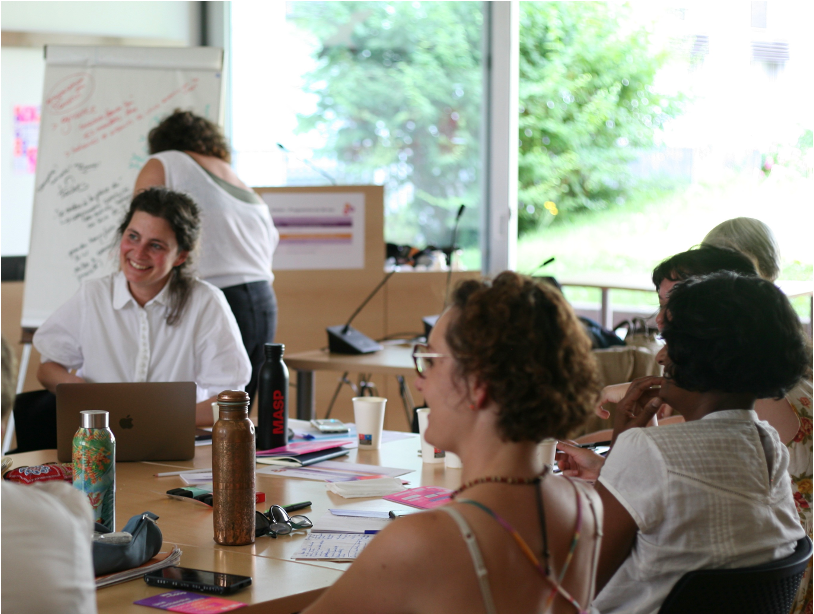
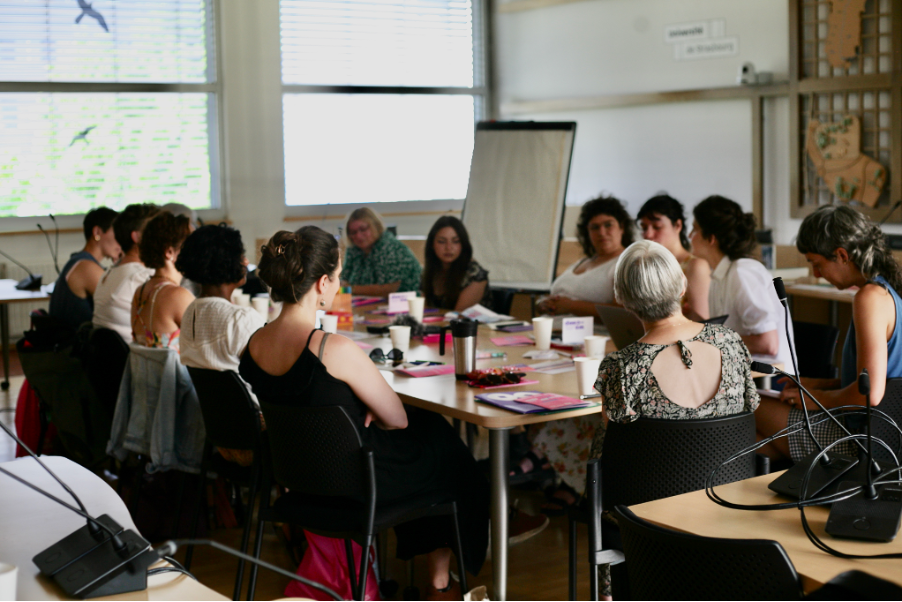
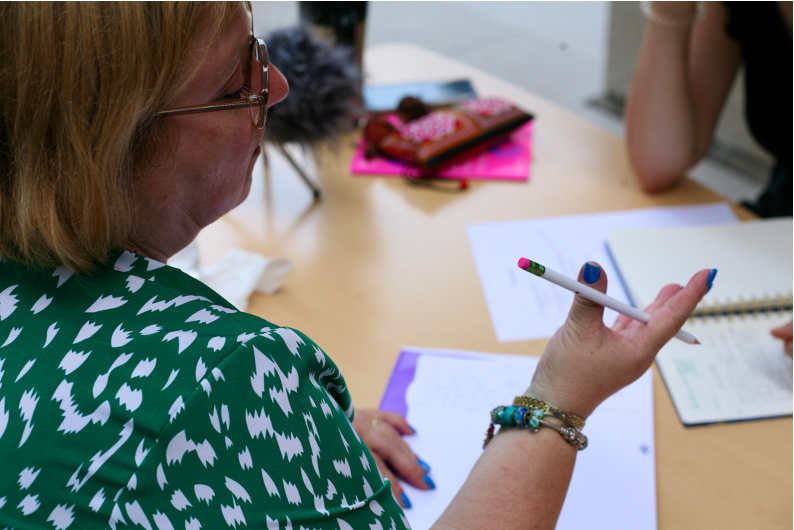
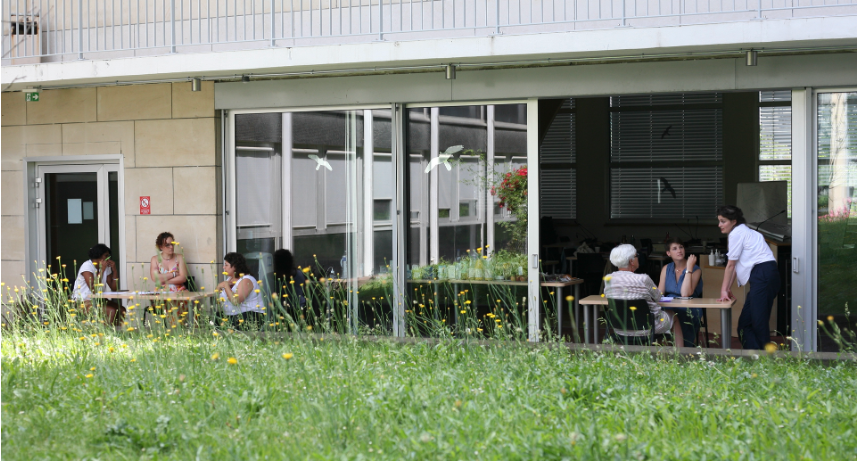
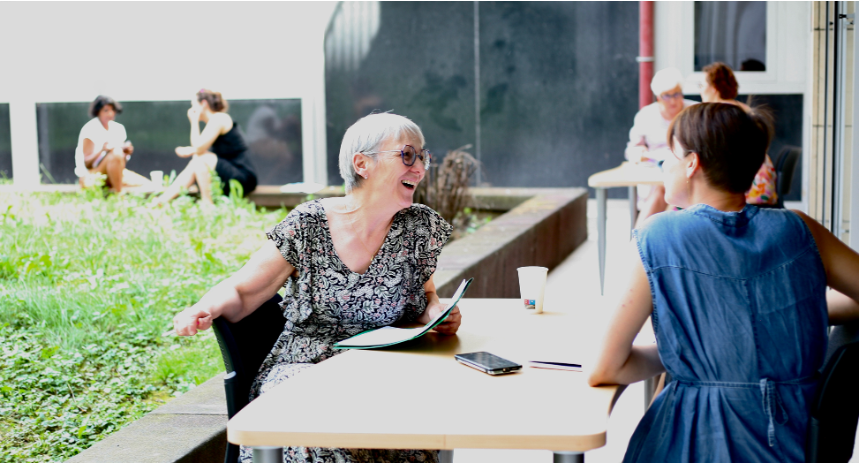
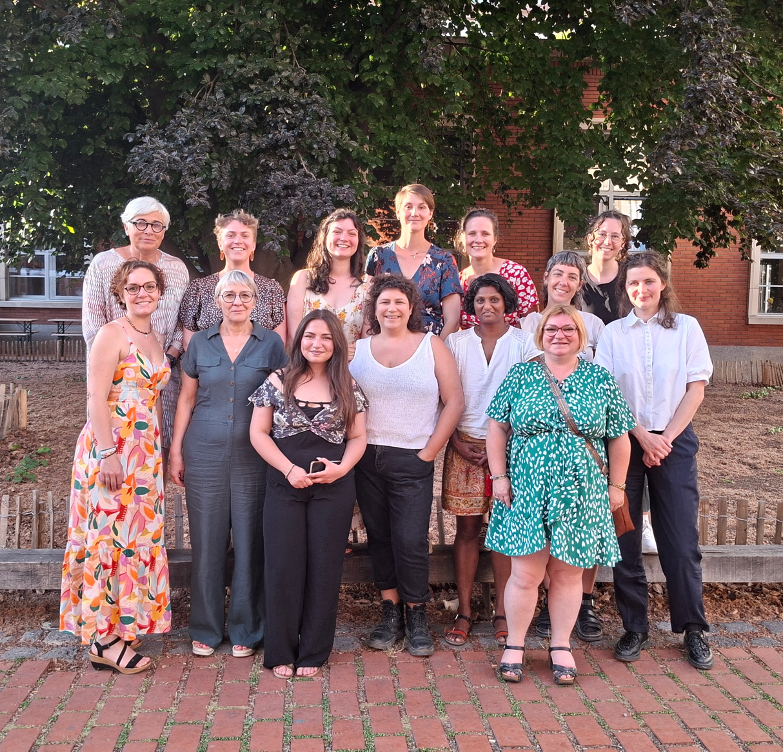
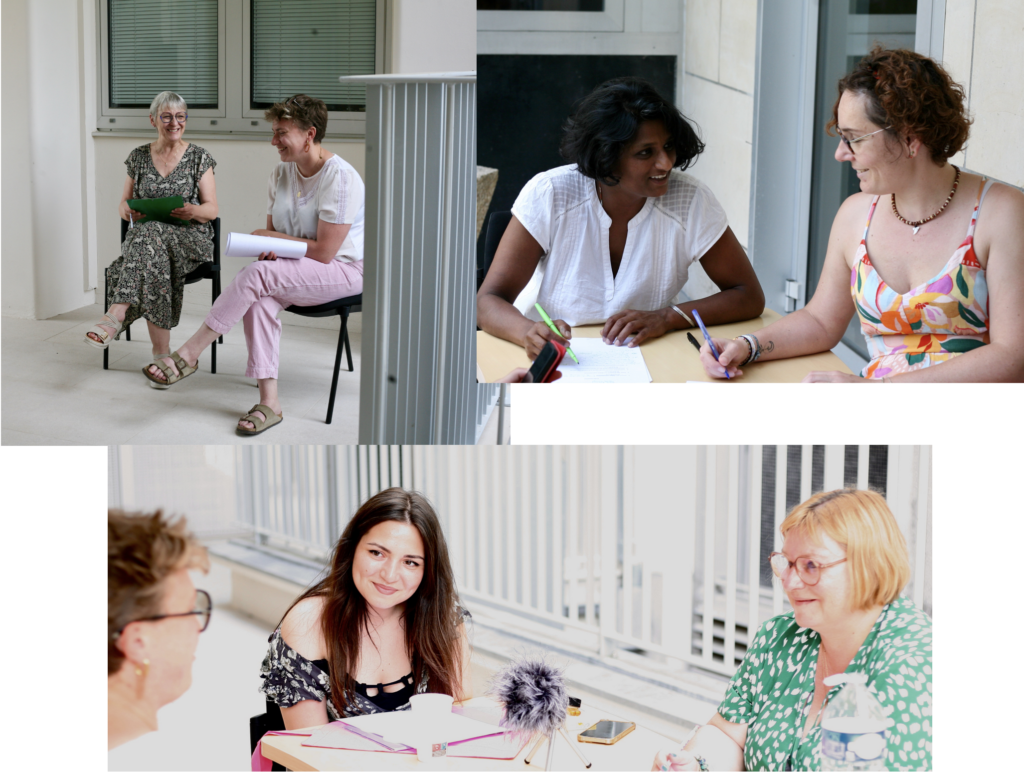
As the WE-COOP team, comprising five female researchers and research engineers, we organised a participatory workshop at the University of Strasbourg on Saturday 30 May 2026, bringing together around ten female members of worker co-operatives (SCOP) from a variety of sectors. This workshop forms part of the second phase of the research project and is a key event in its participatory approach: directly involving female co-operative members in shaping the research by inviting them to meet with us and help refine the main research questions.
This approach aims to ground the scientific research in lived work experiences and concerns of the participants. Is there a shared experience associated with being a woman working in a SCOP, beyond the diversity of occupations, tasks, and career paths? Are SCOPs capable of addressing women’s aspirations for individual and collective emancipation as a social group? These are some of the questions that ran throughout the day.
This experimental workshop also aimed to foster reciprocal relationships between co-operative members and researchers: learning from participants’ work experiences in order to produce new knowledge that benefits the scientific community, while also enabling co-operative members to reclaim their struggles and narratives through this space for sharing and collective reflection – and who knows, to expand their capacity for agency at work (in the broadest sense).
How did we form the group of participants?
Following the questionnaire, 243 co-operative members volunteered to take part in the workshop — and we would like to thank them warmly for doing so!
WE-COOP’s aim was not to create a representative group of co-operative members — an impossible task! — but to bring together a group with a diversity of work experiences, whilst giving a voice to co-operative members who were under-represented in the responses to the questionnaire during the first stage of the research.
In order to explore what might constitute the work experiences of women employees in SCOPs, we endeavoured to form a diverse group based on various criteria: individual criteria on the one hand (type of occupation, age, whether or not a member-associate, relationship to feminism, position within the hierarchy, level of education), and criteria related to the SCOP on the other (sector of activity, size, type of founding, proportion of men and women).
It proved difficult to make selections based on these few criteria using the questionnaire alone. Ultimately, the group came together gradually, partly depending on the availability of the co-operative members.
How did the day unfold?
We spent the morning holding two discussion rounds so that the participants could share their experiences.
The first discussion round involved describing their most recent working day (or equivalent), which revealed a wide variety of tasks and activities depending on the sector, as well as different ways of organising their schedules, but also some common concerns. One was the importance of maintaining and fostering connections—either by nurturing existing relationships with colleagues and fellow co-operative members or by finding ways to create such connections when work arrangements made this difficult. Another was the development of adaptation strategies to deal with the everyday challenges of work, including those shaped by gender relations, such as the management of time, emotions, and the “infrapolitical” interactions that structure daily working life.
The second round of contributions was devoted to recounting their most recent working meeting. Its purpose was to make visible how participants experienced deliberative and democratic practices within their cooperatives. They were invited to describe as precisely as possible the emotions they felt during these meetings, the aspects they found challenging or inspiring, and also how the setting, the frequency of meetings and their colleagues’ behaviour might affect their ability to speak up and their sense of belonging. These discussions also revealed diversity in the frequency of meetings; whether or not time was set aside specifically for members versus time spent jointly with non-member employees; the topics discussed (financial decisions, discussions on flexible working arrangements for parents); and the formats used (traditional meetings, off-site meetings, or workshops).
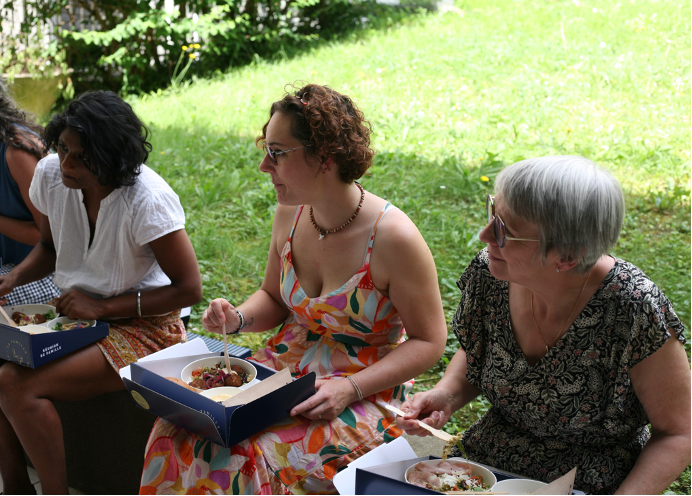
The lunch break was a truly convivial occasion, during which the participants and team members were able to make the most of the time to chat amongst themselves and discuss the topics raised during the discussion rounds in greater detail.
We began the afternoon with a final round of discussions focusing on what changes would be beneficial to improve cooperation at work. Building on the collective sharing that had taken place throughout the morning, the participants identified three key levers through which greater equality and emancipation in the workplace might be achieved.
The first concerns economic distribution. The morning discussions reminded us that, despite the founding principles of worker co-operatives, neither pay equality amongst members nor full transparency regarding internal financial management and access to membership co-operative status can be taken for granted. For some of the participants this situation generated a sense of injustice. Their aspirations for greater equality were expressed through calls for easier access to co-operative membership and a fairer distribution of economic resources, particularly through reducing wage disparities within the SCOP.
The second lever identified relates to the distribution of power. Drawing on their work experiences, participants spontaneously highlighted the need to establish safeguards against the concentration of power within internal hierarchies. Their proposals included limiting the renewal of leadership mandates; involving all employees, including non-member workers, more fully in board discussions; formalizing monitoring mechanisms (either within the SCOP or across the broader SCOP network) to help ensure that cooperative practices function effectively; setting aside dedicated time during working hours to reflect on and strengthen internal democratic processes (thereby avoiding the exclusion of those unable to participate outside working time) ; and systematically providing training on the functioning of SCOPs so that all employees can fully engage with and understand the co-operative model.
Finally, the third lever for improving cooperation concerned fostering a deeper understanding and recognition of each person’s work within the SCOP. Participants proposed a range of initiatives aimed at increasing awareness of the constraints and demands associated with different roles, thereby supporting more equitable forms of work organization. These included spending a period of “internship” to “put oneself in the shoes” of one’s colleagues, collectively clarifying the scope and responsibilities of particular roles, and making visible the mental load often carried by versatile workers who perform multiple functions within the SCOP.
The second part of the day was devoted to one of the central questions of the WE-COOP project, a topic that had nevertheless received relatively little spontaneous attention during the morning discussions: the relationship between paid work and reproductive labour, and the role that worker co-operatives might play in fostering a more equitable distribution of this invisible work. Reproductive labour encompasses domestic work, but also care work directed toward vulnerable individuals, as well as care for animals, objects, and the broader environment. Taken together, these activities contribute to the reproduction and maintenance of society over time: from caring for children and recycling waste to sustaining convivial social relationships, both at work and within families. Following a brief training session introducing the basics of semi-structured interviewing, the WE-COOP research team invited participants to put oneself “in the shoes of a sociologist”. Working in pairs or small groups, they designed interview guides that they considered relevant to their experiences as women working in worker cooperatives. They then conducted short peer interviews with one another, exploring a range of questions: what they do—or do not—identify as “reproductive labour”; the place this work occupies in their everyday lives; how it intersects with paid employment; how it is distributed; and what role worker co-operatives should play in the organisation of this reproductive labour.
These exercises led to theoretical reflections (such as the need to agree on a shared definition of reproductive labour), ethical and methodological reflections (how to approach intimate aspects of other people’s lives without being too intrusive, and how to build trust and respect in interaction), and existential reflections (others’ experiences reflect our own judgments and concerns, which highlights the importance of situating one’s perspective, both in terms of the biases we may bring and the benefits that shared experience can bring to the production of knowledge).
In the continuation of these exercises, the concluding part of the day made it possible to identify at least three shared concerns: a common commitment to making visible and integrating those responsible for maintenance and cleaning work within worker co-operatives, as a key thread for understanding intersectional power relations at work; the importance of care, goodwill, and conviviality in cooperative work, as exemplified by the time spent together during the workshop; and finally, the fundamental question of collective action and the political struggle in addressing gender relations at work, understood in a broad sense. These are all essential questions that will shape the second phase of the WE-COOP project, which is currently beginning!
The day drew to a close with some free time, including the option of a guided tour of Strasbourg, after which the whole group got together for a final, convivial dinner at the restaurant housed in Strasbourg’s former tobacco factory (the renovation of which was partly designed by one of the day’s participants – a happy coincidence!).
What are the next steps following this workshop?
At the end of this day, which was rich in meetings and discussions, several ideas were put forward to continue this collaboration between co-operative members and researchers.
First, we plan to all meet again online in autumn 2026. This will be an opportunity for the WE-COOP team to discuss the progress made in the research process over the summer, highlighting how this workshop has contributed to it (for example, the interview guidelines will be drafted taking into account the work carried out during the workshop).
Co-operative members will also be able, if they wish, to become researchers alongside the WE-COOP team. They will have the opportunity to conduct sociological interviews, in pairs with a researcher, with other co-operative members who have agreed to share their experiences.
Another issue raised is that of developing practical tools that can be of direct use to the entire community of female co-operators. The idea of a ‘collective toolkit’ available online was put forward, which female co-operators can contribute to based on their own experiences.
Another proposal is the creation of a large-scale network of women co-operative members, where they could directly exchange information and share resources. The WE-COOP team will reflect on how to set up such tools. In a first phase, they may be hosted on the project website, with the longer-term aim that the co-operative community itself will take ownership of them by the end of the research project (scheduled for 2028).
A concluding workshop for the WE-COOP project is also being considered, in order to discuss the research findings and what could still be done beyond the project.
To be continued…
Chapter on “Worker Co-operatives”
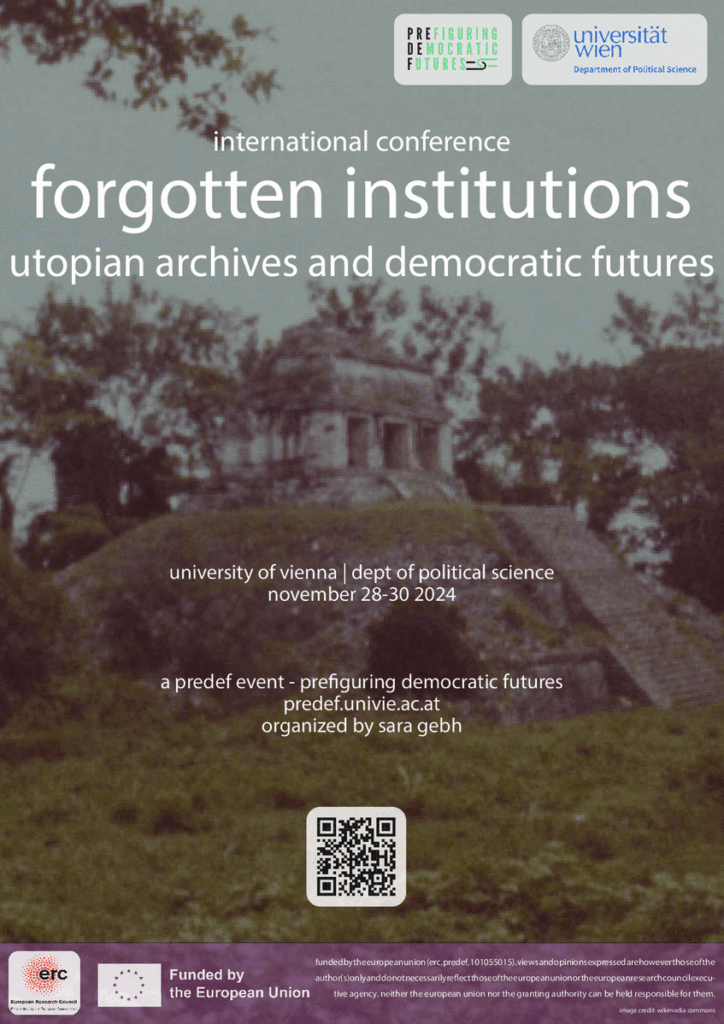
Presented by Ada Reichhart, for the Handbook of Forgotten Institutions at the international conference on “Forgotten Institutions. Utopian Archives and Democratic Futures”, organised by Sara Gebh, post-doctoral fellow in the ERC Research Project “Prefiguring Democratic Futures. Cultural and Theoretical Responses to the Crisis of Political Imagination” (principal investigator: Oliver Marchart).
“Penser la démocratie radicale à partir des Scop comme forme de vie coopérative au travail”
Paper given by Ada Reichhart, at the “Ethnographies of Radical Democracy” conference, organised by Federico Tarragoni (Prof. of Political Sociology – University of Caen/IUF), Pascale Devette (Ass. Prof. of Political Science – University of Montréal), Yohan Dubigeon (Ass. Prof. of Education Sciences – University of Saint Étienne), Audric Vitiello (Ass. Prof. of Political Science – University of Tours).
“One woman, one voice”: Women-run cooperatives and their struggle for democracy at work
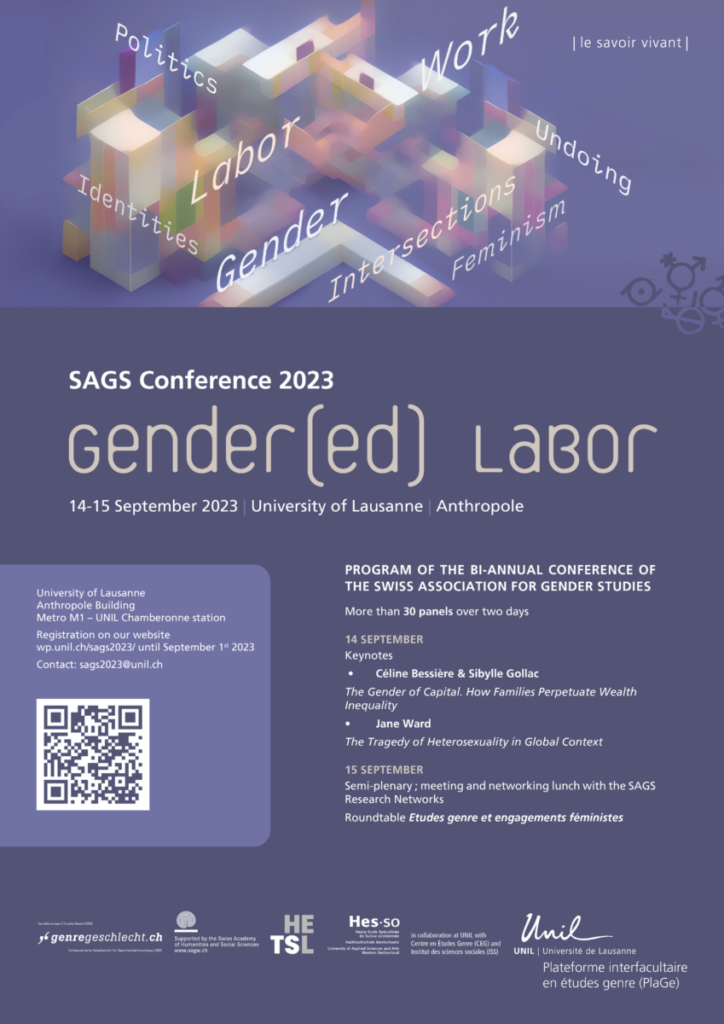
Presented by Ada Reichhart, at the “Gender(ed) Labor” conference, organised by the Swiss Association for Gender Studies (SAGS).
When? 14th-15th September 2023
Where? University of Lausanne, Lausanne, Switzerland
“Feminist utopias at work: the example of a women-run worker cooperative”
Paper given by Ada Reichhart, at the “New Work – New Problems? Gender Perspectives on the Transformation of Work” conference, organised by the Gender Studies Committee of the Swiss Sociological Association and Lucerne University of Applied Sciences and Arts (LUASA).
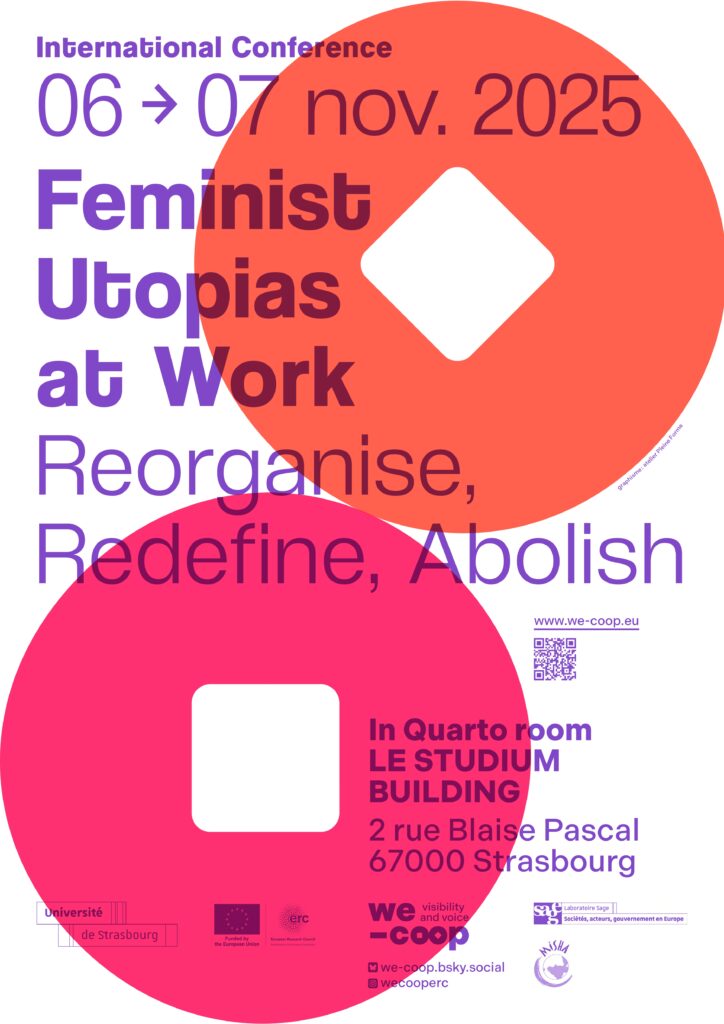
Feminist Utopias at Work Reorganise, Redefine, Abolish
Thursday 6 and Friday 7 November 2025, 8:30 a.m.-6:00 p.m.
University of Strasbourg In Quarto Room, Le Studium building 2 rue Blaise Pascal — Strasbourg, France Directions
FREE ADMISSION AND OPEN TO ALL
Keynote Speaker: Jessica GORDON-NEMBHARD,Professor of Community Justice and Social Economic Development, Department of Africana Studies, John Jay College, CUNY Author of Collective Courage: A History of African American Cooperative Economic Thought and Practice (Philadelphia: Pennsylvania University Press, 2014). Watch again: https://www.canalc2.tv/video/17034
Guest Speakers Round Table: Katia GENEL, Professeure de philosophie, Sophiapol, Université Paris Nanterre Maud SIMONET, Directrice de recherche en sociologie au CNRS, Laboratoire IDHE.S Nanterre Watch again: https://www.canalc2.tv/video/17035
Summary of the Conference: Although feminist utopias have been the object of an important body of work especially in the literary field, the specific paradigm of labour within these experiments and imaginaries has received only limited attention. The purpose of this conference is to explore to what extent and in what ways labour (both as a site of oppression and emancipation) serves as a paradigm in feminist utopia-building. Utopias in the sphere of labour and their political content, which has sedimented in critical theory on work, are imprinted by the Western patrimony of utopian socialism. Although there has been radical, short-lived and often forgotten feminist influences as well as a matrimony now being highlighted, political constructions of “what labour could become” remain shaped by figures such as Fourier, Owen or Saint-Simon. Feminist critiques have challenged androcentric definitions of labour, broadening the field to include alternative theoretical frameworks. Despite these critical claims, the historical development of capitalism – with its persistently gendered and racialised division of labour – can be considered as dystopian – a “bad place” – that has led some feminist thinkers to reject the idea of equality in such a context. The conference will use utopia for its central function: “confronting the problem of power” through sidelining and introducing “a sense of doubt that shatters the obvious” (Ricoeur). While we firmly acknowledge the need for utopia in critical thinking, we also underline the importance of multiple approaches to emancipatory politics as a compass for utopia-building. As a result, we will accept understandings of utopia both as a reflexive tool for critique and as a heuristic tool for transformation. Three complementary approaches to utopia-building will be considered: 1. Reorganise labour ; 2. Redefine labour ; 3. Abolish labour
Publication: We are planning to publish the most relevant and developed papers as an open-access book on the theme of “Feminist Utopias at Work” with a renowned publisher.
“Women’s Self-Management & the Politics of Labour”
Talk given by Ada Reichhart.
Recognized for their transformative potential in democratizing labor relations, worker co-operatives are not just a men’s story. Women have also used these models to redefine workplace equality. Let’s explore how feminist ideals have taken shape in these concrete utopias!
When? 14th May 2024, 8 p.m.
Where? @ The People Bar – 7 Rue de la Krutenau, 67000 Strasbourg